Urea Cream for Feet: When 42% Makes Sense
Share
A heel can feel like sandpaper long before it becomes visibly cracked. Then socks snag, walking hurts, and a simple shower stings. Urea cream for feet is made for this kind of stubborn dryness because it does more than coat the skin - it helps soften built-up, hardened skin so moisture can do its job.
For people managing dry feet, reduced mobility, diabetes-related foot concerns, or changes in skin that come with age, consistent care can make daily movement more comfortable. The right urea strength and routine matter, especially when thick calluses and heel fissures are part of the picture.
Why feet become dry, thick, and cracked
The skin on your soles works hard. It bears pressure with every step, has fewer oil glands than most areas of the body, and can lose moisture quickly in dry air, open-back shoes, or long hot showers. When skin is repeatedly stressed and dehydrated, it can respond by becoming thicker. That thick layer may feel protective at first, but it is less flexible and more likely to split.
Cracked heels are not only a cosmetic concern. Deep fissures can be painful, catch on fabric, and create an opening where bacteria may enter. Poor circulation, neuropathy, prolonged standing, obesity, certain skin conditions, and poorly fitting footwear can all make the problem harder to manage.
For someone with numbness, tingling, or reduced sensation, cracks may be easy to miss until they become more serious. That is why a regular foot check and a purposeful moisturizing routine are practical forms of prevention.
How urea cream for feet works
Urea is a substance that occurs naturally in healthy skin. In skincare, it is used as a humectant and keratolytic. In plain language, it draws water into dry skin and helps loosen the bonds holding dead, thickened skin cells together.
This two-part action is what sets urea apart from a basic lotion. A standard moisturizer may make the surface feel smoother for a few hours. A well-formulated urea cream can help soften rough, hardened areas over time while supporting the skin's moisture barrier.
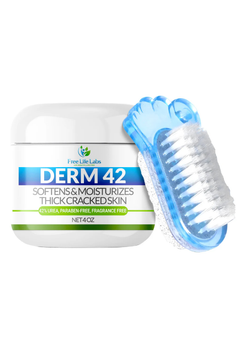
The concentration makes a real difference. Lower-strength urea products can be useful for everyday dryness. Higher concentrations are generally better suited to thick calluses, severe heel roughness, and persistent cracking. Maximum-strength 42% urea creams, such as Derm 42 from Free Life Labs, are designed for intensive foot skin care when ordinary lotions are no longer enough.
Higher strength is not automatically better for every situation. If your skin is mildly dry, sensitive, freshly shaved, or irritated, a strong formula may sting. The goal is not to use the highest possible percentage. It is to use a formula that softens stubborn skin without making already vulnerable skin feel worse.
When a 42% urea cream may be a good fit
A high-strength urea cream may make sense when your heels remain thick and rough despite regular moisturizing, or when callused skin has become hard, yellowed, flaky, or prone to splitting. It can also help people whose feet become dry quickly because of age, climate, closed shoes, or reduced circulation.
Results are usually gradual rather than overnight. In the first several applications, the skin may feel softer. Over the following days and weeks, thick areas can become easier to manage and less likely to catch, peel, or crack. Consistency is what gives the active ingredient time to work.
Apply cream to clean, thoroughly dried feet, paying close attention to heels, the balls of the feet, and other thickened areas. Do not put it between the toes unless a healthcare professional has instructed you to do so. Excess moisture between toes can contribute to skin breakdown and fungal growth.
Many people do well applying a rich urea cream once daily, often at night when they can wear clean cotton socks afterward. If the product directions allow for more frequent use and your skin tolerates it, twice-daily application may be helpful during a period of intensive repair. Wash your hands after use and give the cream time to absorb before walking barefoot.
Pair cream with habits that protect your skin
Urea cream works best as part of a simple, steady foot-care routine. You do not need to scrub aggressively or use harsh tools to get results. In fact, over-filing can trigger irritation and lead the skin to thicken again.
After bathing, pat feet dry rather than rubbing them hard, then apply your cream while the skin is clean and ready for moisture. Keep showers warm rather than very hot, since hot water can worsen dryness. Choose supportive shoes that do not rub against your heels, and wear socks that wick away moisture without tight seams.
If you have a thick callus but your skin is intact and you have normal feeling and circulation, gentle use of a foot file after bathing may be appropriate. Stop if the area becomes tender, red, or raw. Never cut calluses with a blade or attempt to peel away thick skin yourself.
For people with diabetes, peripheral neuropathy, poor circulation, or a history of foot ulcers, professional guidance is the safer choice before filing, scraping, or using chemical callus removers. A podiatrist can help determine whether the thick skin is routine dryness or a pressure point that needs a different solution.
When cracked feet need medical attention
A moisturizer is supportive care, not a substitute for treating an infection, ulcer, or wound. Do not apply a strong urea cream directly into an open, bleeding, draining, or deeply split wound unless your clinician specifically tells you to.
Contact a healthcare professional promptly if you notice any of the following:
- Redness, warmth, swelling, pus, odor, or increasing pain around a crack
- A wound, blister, or fissure that is open or not improving
- Skin that turns dark, blue, pale, or unusually cold
- Fever or feeling unwell along with a foot problem
- Any new break in the skin if you have diabetes, neuropathy, poor circulation, or immune-system concerns
What to expect from your routine
Foot skin did not become thick and dry in a day, and it usually will not return to a healthier condition after one application. Give a urea-based routine time. Track practical changes: Are your heels less rough? Do socks stop catching? Is walking more comfortable? Are cracks becoming shallower rather than deeper?
If there is no improvement after two to three weeks of consistent use, reassess. You may need to change your footwear, address pressure points, treat an underlying skin condition, or speak with a podiatrist. Persistent dryness can sometimes be a sign that your feet need more than moisture alone.
Comfortable feet support more than a better-looking heel. They make it easier to stand at the counter, take a walk, keep an appointment, and stay involved in the life you enjoy. Start with clean feet, a consistent application, and the attention to small changes that helps keep small problems from becoming bigger ones.