A Guide to Severe Foot Dryness That Actually Helps
Share
When the skin on your heels feels hard enough to snag a sock, every step can become a reminder that your feet need more than a quick swipe of lotion. This guide to severe foot dryness explains what persistent roughness and cracking can mean, how to care for it safely at home, and when a foot problem deserves professional attention.
Severe dryness is not simply a cosmetic concern. Thick, rough skin can split into painful fissures. Those openings can catch on bedding, sting in the shower, bleed, and make walking less comfortable. For people with diabetes, neuropathy, circulation concerns, or a history of wounds, damaged foot skin requires even more caution because reduced feeling can make a small crack easy to miss.
Why Foot Dryness Gets So Severe
Feet have fewer oil glands than many other parts of the body, and the soles have none. They rely on sweat and the skin barrier to retain moisture. Pressure, friction, dry air, hot water, open-back shoes, and long hours on your feet can steadily wear that barrier down.
Calluses are part of the problem for many people. Your skin builds them in response to repeated pressure, usually on the heels, balls of the feet, or around the toes. A thin callus can be protective. But when it becomes thick and dehydrated, it loses flexibility. Instead of bending with each step, it pulls apart.
Age, certain medications, eczema, psoriasis, thyroid conditions, and fungal infections can also contribute. So can nerve damage. With peripheral neuropathy, you may not feel a hot spot, rubbing shoe, or developing crack until the skin is already badly irritated. That is why a consistent inspection routine matters as much as the cream you use.
A Guide to Severe Foot Dryness: Start With the Skin Barrier
The goal is not to scrub your feet into softness in one night. Aggressive filing or cutting can create irritation and tiny injuries, especially when circulation or sensation is reduced. The safer approach is to soften, moisturize, and gradually remove only the loose, dead surface skin.
Start by washing your feet with lukewarm water and a mild cleanser. Hot water may feel soothing, but it strips moisture and can make dryness worse. Pat carefully between the toes. Moisturizer belongs on the soles, heels, and dry areas of the foot, not between the toes, where trapped moisture may encourage skin breakdown or fungal growth.
For thick, cracked heels, an ordinary lightweight body lotion often does not have enough staying power. Look for a purpose-built foot cream with urea. Urea draws water into dry skin while helping soften the buildup that makes heels feel rigid. Higher concentrations are generally better suited to very thick, rough areas, while lower-strength formulas may be enough for routine maintenance.
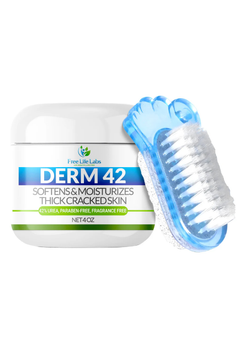
A maximum-strength 42% urea formula, such as Derm 42 from Free Life Labs, is designed for intensive dry, cracked foot care. Apply a small amount to clean, dry heels and other rough areas as directed. Consistent use matters. Skin that has been dry for months rarely changes after one application, but a focused routine can help the surface become softer, smoother, and more comfortable over time.
Make nighttime your repair window
After applying your foot cream in the evening, put on clean, breathable cotton socks. This helps keep the cream where it belongs and limits transfer to sheets or floors. It also gives the formula several uninterrupted hours to support the skin barrier.
Do not wrap the feet in plastic or use airtight coverings unless a clinician specifically tells you to. Occlusion can be helpful in select situations, but it can also hold excess moisture against fragile skin. If your feet tend to sweat, breathable socks are the better choice.
Use gentle exfoliation only when skin is intact
If there are no open cracks, bleeding areas, blisters, or signs of infection, gentle use of a clean foot file after bathing can help remove loose surface skin. Keep the pressure light. Stop if the area becomes sore, pink, or tender.
Never use razors, callus shavers, or sharp tools at home. Avoid strong peeling acids and do-it-yourself foot peels on severely cracked skin. These methods can remove more than dead skin and raise the risk of a wound, particularly for anyone with diabetes, neuropathy, poor circulation, or a past foot ulcer.
Protect Your Feet During the Day
A good treatment routine can be undone by shoes that keep rubbing the same spot. Examine the inside of your footwear for rough seams, flattened insoles, gravel, or areas that press against a heel or toe. Shoes should have enough room for your toes, stable support, and a back that does not slide against the heel with every step.
Wear clean, dry socks that cushion the foot without bunching. Change them if they become damp. Going barefoot, even around the house, can expose dry and cracked feet to splinters, burns, and unnoticed injuries. Supportive house shoes or well-fitting slippers provide a safer alternative.
If you stand or walk for long periods, consider whether the pressure pattern is part of the issue. Repeated heel pressure can keep calluses coming back. A podiatrist may recommend changes to footwear, inserts, or activity habits to reduce stress on the areas that repeatedly crack.
Check Your Feet Every Day If You Have Diabetes or Neuropathy
When feeling in the feet is reduced, visual checks become essential. Choose a regular time, such as after your shower or before bed. Look at the tops, soles, heels, sides, and between the toes. A hand mirror can help, or a family member can check areas that are hard to see.
Watch for new redness, warmth, swelling, drainage, odor, blisters, cuts, color changes, or cracks that are deepening instead of improving. Do not assume a painless area is harmless. Neuropathy can mask pain, while skin damage continues underneath.
Daily checks also give you a realistic view of progress. A heel that is less white, flaky, and rigid is moving in the right direction. A crack that becomes more red, wider, wetter, or tender needs prompt attention rather than another round of home exfoliation.
When Dry, Cracked Feet Need Medical Care
Home care is appropriate for many cases of dry, rough foot skin. It is not the right answer for every situation. Contact a healthcare professional or podiatrist promptly if you have diabetes, poor circulation, neuropathy, or immune suppression and notice any break in the skin.
Seek care quickly for a crack that is bleeding, draining, warm, swollen, increasingly painful, or surrounded by redness. Fever, chills, red streaking, a foul odor, or skin that turns dark, blue, or unusually pale can signal a more urgent problem. Do not wait to see whether it improves on its own.
It is also worth getting an assessment when dryness keeps returning despite several weeks of consistent care. The underlying cause may be a fungal infection, inflammatory skin condition, pressure issue, or another concern that needs a different treatment plan. A clinician can safely reduce thick callus and help you protect skin that is prone to breaking down.
Build a Routine You Can Keep
The most effective routine is often simple enough to repeat. Cleanse gently, dry thoroughly, apply a targeted moisturizer to dry areas, wear supportive socks and shoes, and inspect your feet every day. Intensive creams are especially useful at night, while a lighter moisturizer may be more comfortable in the morning if you prefer not to have a heavy feel inside your shoes.
There is a trade-off with stronger softening ingredients: they can be highly effective on hardened skin, but they may sting on raw or open fissures. If a product burns, causes a rash, or worsens irritation, stop using it and ask a healthcare professional what is appropriate for your skin.
Comfortable feet support more than a pleasant walk. They make it easier to stay active, handle daily routines, and move through life with confidence. Give dry skin consistent, careful attention, and let a clinician step in early whenever a crack looks like it may become more than a crack.